
Easy Parkour: Escape Run Obby
Blox GlobalCasual
4.321.00 Reviews
- Version
- 1.14
- Installs
- 5.00M
- Age Rating
- Everyone
Screenshots
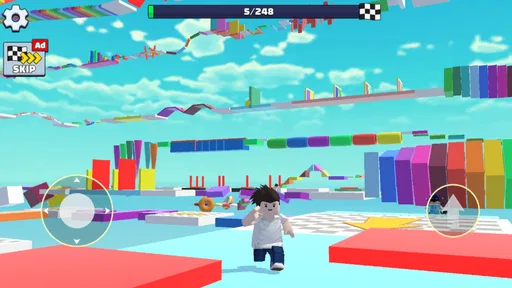
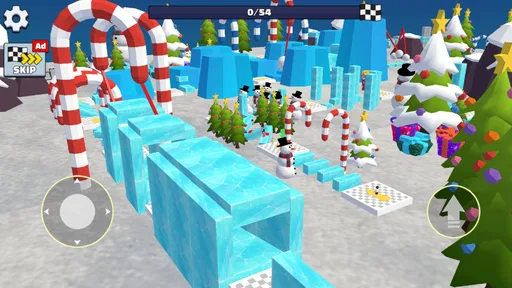
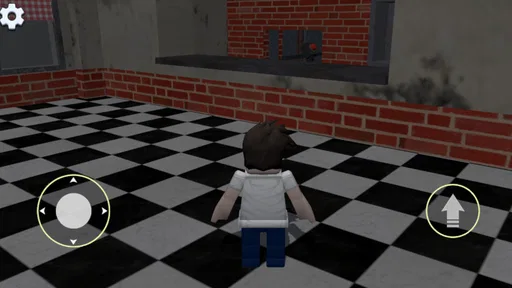
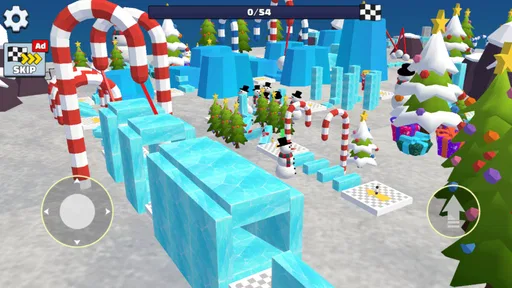
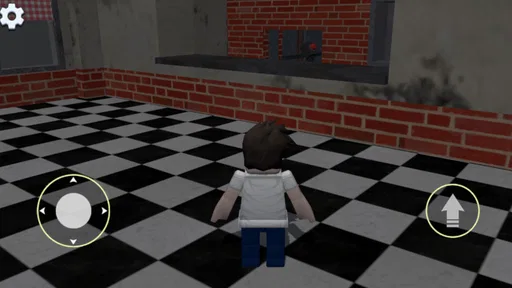
Our Review of Easy Parkour: Escape Run Obby
 Analysis by Appyee
I spent time with Easy Parkour: Escape Run Obby to see whether its promise of approachable parkour holds up in ordinary play, not just in a quick store preview. This is a casual game from Blox Global, built around short obstacle-course challenges and touch controls that are easy to understand. The basic appeal is immediate: move through a course, react to hazards, and keep trying when a jump goes wrong.
That simplicity makes it a natural pick for brief sessions. I can imagine opening it while waiting for an appointment, taking a few attempts at a difficult section, and putting it down without needing to remember a complicated story or a large set of rules. At the same time, “easy” describes the entry point more accurately than every moment of play. Timing still matters, and repeated attempts can become tiring if you prefer games that offer constant variety or a strong sense of progression.
The game is free to download and is suitable for Everyone, which widens its audience considerably. It has reached over five million installs and holds a 4.3 average from around eight thousand ratings, so it is clearly attracting more than a tiny group of parkour fans. I would still treat those figures as a sign of broad interest rather than a guarantee that every player will find the controls comfortable.
How Easy Parkour works for different players and situations
I find that the game’s simple, direct parkour format can suit quite different routines, but the same timing demands won’t feel comfortable for everyone. In the next section, I’ll look at how screen size, attention, and physical input can change a quick run from an easy break into a frustrating one, and what small adjustments may help.
Readability and navigation during a run
The strongest part of the experience is how quickly the main task becomes clear. You do not need to study a complicated interface before making your first move. The parkour format naturally gives each attempt a visible purpose: reach the next safe area, avoid the obstacle, and continue forward. That direct structure is helpful for younger players and for anyone who dislikes menus packed with icons, currencies, and layered objectives.
I also found the visual language easier to follow than in many busier casual games. A course presents itself as a sequence of physical spaces rather than a list of instructions. That matters when I am playing with limited attention, because I can focus on the next landing instead of constantly checking a mission panel. The straightforward design is one reason the game feels less intimidating than a larger platform adventure.
There is a useful distinction between understanding a course and executing it. The route may be obvious, but a clear route does not automatically mean a forgiving one. When I miss a jump, the problem is usually not that I failed to understand the objective; it is that my timing or movement was slightly off. Players who need extra time to interpret the screen may appreciate the simple goal, while players who need slower physical input may still find the action demanding.
For navigation, I recommend treating each attempt as a short observation exercise rather than rushing immediately. Watch the movement of an obstacle, notice where the next landing sits, and then commit. This is a small change, but it reduces the frustration of repeating the same mistake. It also makes the game feel more deliberate for players who do not enjoy rapid, instinctive reactions.
Controls, motor effort, and sensory comfort
The touch controls are smooth enough to make the central idea approachable. I did not have to learn a long command list, and that keeps the first few minutes friendly. A player who is comfortable with ordinary touchscreen movement can understand the relationship between a swipe or tap and the character’s motion without much explanation.
That low control complexity is a genuine advantage for people who find multi-button games overwhelming. It also makes the game suitable for casual play on a phone rather than requiring a controller. Someone who wants a quick challenge while standing in a queue can begin without carrying extra equipment or setting aside a long setup period.
However, fewer controls do not remove every motor barrier. Parkour depends on accuracy, and accuracy can be difficult for players with tremors, reduced dexterity, slower reactions, or fatigue in the hand holding the phone. A control scheme can be simple and still require precise timing. In my experience, the most demanding part is not remembering what to press; it is making the right input at the right moment.
Screen size also changes the experience. On a compact phone, the action may feel more concentrated, leaving less visual room to judge a landing. A larger display can make the route easier to inspect, although it may be less convenient for one-handed play. If you are sharing a device with a child, it is worth letting the player try a few courses before deciding whether the touch precision feels manageable.
Sensory comfort depends on the individual. The game’s obstacle-course presentation is visually active because movement and timing are central to the challenge. Players who are sensitive to motion, quick changes, or repeated failure should try a short session first rather than assuming that a simple interface will automatically feel calm. I would also lower the device volume in shared spaces or during quiet moments, since a game designed for active play is not always ideal when you need a silent activity.
One practical habit helped me: I played with the phone supported instead of gripping it tightly in one hand. Resting it on a table or holding it with both hands gave me more stable control and reduced the tendency to overcorrect. That will not solve every accessibility issue, but it is a useful adjustment for anyone who finds precise touchscreen movement uncomfortable.
Where it fits into everyday life
This is at its best as a flexible, short-session game. Imagine having ten minutes before a train arrives. You can start a run, focus on a few obstacles, and stop without losing an elaborate chain of events in your head. The same quality works for a child who wants a simple game after school or for an adult who wants something more interactive than scrolling through social media.
Because the game is free, the initial decision is easy: download it, test the controls, and decide whether the movement suits you. The trade-off is that free games can encourage spending during play. In this case, individual in-app purchases range from less than a dollar to $169.99, a very wide span. I would recommend checking purchase settings before handing the phone to a child, especially because the game’s accessible entry point may make it attractive to younger players.
The Everyone age rating makes the game easier to consider for a shared family device. Still, an age label does not tell you whether a particular child will enjoy repeated timing challenges or handle optional purchases responsibly. I would let a child play the opening sessions with an adult nearby, not because the core idea is complicated, but because the combination of retries and purchase options deserves sensible supervision.
It also works when you want a game that does not demand a large emotional commitment. There is no need to follow a long narrative or learn a deep strategy system before having fun. That makes it a better fit than a story-heavy adventure for someone who wants immediate action. On the other hand, if your main need is a quiet game for a crowded bus, a turn-based puzzle may be more comfortable because it does not depend on split-second movement.
What it offers compared with familiar casual alternatives
Compared with endless runners, Easy Parkour feels more focused on individual obstacle decisions than on simply surviving a constantly moving track. That can make a mistake feel more understandable: I can usually identify the jump or movement that caused the failure. Endless runners often reward rhythm and distance, while this style of game appeals more to players who like examining a route and improving one section at a time.
Compared with physics-based platform games, it is easier to approach because the experience is not built around unpredictable objects or elaborate controls. The benefit is clarity. The cost is that players who enjoy experimenting with unusual physics may find the parkour format less expressive. If you want to improvise with a character’s abilities, a physics sandbox is likely a better choice; if you want a direct course with a clear destination, this game has the advantage.
It also differs from large platform adventures that combine exploration, collectibles, story, and character development. Easy Parkour is more convenient when you have limited time and do not want another world to manage. I would not choose it as a replacement for a full platformer on a long trip, because its appeal is concentrated in the immediate challenge rather than a broad adventure structure.
One non-obvious strength is that the game can serve as a quick coordination check. I sometimes use a short run to see whether I am alert enough for a more demanding game. If my timing feels poor, I stop after a few attempts instead of blaming the level. That makes it useful as a small break, although players with hand fatigue should treat repeated retries as a reason to pause, not as a challenge to push through.
Remaining barriers and points of friction
The biggest limitation is the dependence on precise touch input. A game can advertise smooth controls and still be inaccessible to someone who cannot make quick, controlled gestures. There is a difference between reducing the number of buttons and offering adjustable input. In my play, the former is evident; players who need larger controls, slower timing, or alternative input should test the game personally before committing to it as a regular activity.
Repeated failure can create another barrier. Parkour games naturally ask you to try again, but the same design can feel discouraging for players who need a more forgiving pace. I found that taking a short break after several failed attempts was more productive than immediately repeating the course. The game is more enjoyable when I treat retries as practice, not as a demand to prove patience.
There is also a social and environmental issue. Fast movement requires attention, so this is not the best choice when you need to watch children, listen for announcements, or move through a busy place. A puzzle that waits for your input may be more practical in those situations. Easy Parkour is portable, but portability does not mean it is equally usable everywhere.
Spending deserves careful attention as well. The free starting point is welcoming, but the upper end of the purchase range is substantial. I would use device-level purchase protections and avoid letting a child explore the payment flow alone. This is not a criticism of the parkour controls themselves; it is a practical part of deciding whether the game belongs on a shared phone or tablet.
Device compatibility is fairly broad because the current release, version 1.14, works from Android 6.0 onward. That helps people using older Android hardware, although compatibility alone does not guarantee that every phone will feel equally comfortable for fast touch play. Performance, screen dimensions, and the physical condition of the device can all affect how easy it is to judge a jump.
Who should try it, and who should choose something else?
I would recommend it to players who want a casual parkour challenge with a quick learning curve, especially those who prefer direct goals over long explanations. It is a good candidate for short breaks, family testing, and anyone curious about obstacle-course games but unwilling to learn a complicated control system first.
I would be more cautious if you need extensive control customization, have difficulty with rapid touchscreen gestures, or want a game that can be enjoyed while only partly watching the screen. In those cases, a slower puzzle game, a turn-based title, or a platformer with adjustable assistance may be a better match. The right question is not whether the game is universally easy; it is whether its particular kind of simplicity matches your abilities and routine.
Players who dislike repetition should also think twice. The satisfaction comes from improving timing and getting farther through a challenge, so the loop has limited appeal if you expect constant new mechanics. Conversely, someone who enjoys noticing a small improvement after each attempt may find that repetition motivating rather than tedious.
For families, I see it as a supervised casual option rather than an automatic recommendation for unsupervised play. The Everyone rating is reassuring for the general theme, and the controls are approachable, but purchase protections and the child’s tolerance for failure still matter. A few minutes of hands-on testing will tell you more than the label alone.
My inclusive verdict after playing
Easy Parkour: Escape Run Obby succeeds because it gets to the point quickly. Blox Global has chosen a format that is easy to recognize, easy to start, and convenient for short sessions. The 4.3 average and over five million installs suggest that this straightforward approach has found a sizable audience, while the free price keeps the first experiment low-risk.
My recommendation comes with a clear condition: judge the game by the physical demands of its jumps, not only by the simplicity of its interface. The readable objective and limited control vocabulary help many players, but precise timing, visual attention, and repeated attempts remain part of the experience. Those details matter more than the phrase “easy parkour” when deciding whether it will be comfortable for you.
I like it most as a small, focused game for a stable setting: sitting down, using both hands if needed, and playing in short bursts. That setup makes the controls easier to manage and gives me permission to stop before fatigue turns a fun challenge into frustration. If you need a slower pace or stronger adjustment options, choose another casual game. If you want an immediate obstacle course and are happy to improve through practice, this is a friendly place to begin.
Overall, I would install it for quick parkour sessions and recommend it to a friend who enjoys simple movement challenges. I would also mention the purchase range, the need for accurate touch input, and the value of taking breaks. Those caveats do not cancel out the game’s appeal; they define the players and situations in which it works best.
Verdict
Strengths of Easy Parkour: Escape Run Obby
- Simple controls make it easy for beginners to start playing.
- Short obstacle sections are convenient for quick gaming sessions.
- Bright visuals make platforms and hazards easy to recognize.
- Restarting after a mistake is quick and keeps the action moving.
- The parkour format encourages players to improve their completion times.
Limitations of Easy Parkour: Escape Run Obby
- Some stages may feel repetitive after extended play.
- Precision jumps can be frustrating on smaller phone screens.
- Progress may feel slow if later levels require repeated attempts.
- The game may become less enjoyable for players seeking deeper mechanics.
- Ads or optional purchases may interrupt the overall experience.
Other Releases by Blox Global
View All
Blox Tower: Slap Master
Adventure4.1

Obby: Disaster Survival
Adventure3.3

Parkour Escape: Night Forest
Adventure3.2
Similar Picks in This Category
View All
My Talking Angela
Outfit7 Limited4.2

My Talking Tom
Outfit7 Limited4.3

Pou
Zakeh4.2

My Talking Tom 2: Pet Game
Outfit7 Limited4.3

Candy Crush Saga
King4.6

Bridge Race
Supersonic Studios LTD4.1
Frequently Asked Questions
What is Easy Parkour: Escape Run Obby?
Easy Parkour: Escape Run Obby is a casual obstacle-course game focused on movement, timing, and quick reactions. Players guide a character through colorful stages filled with platforms, gaps, traps, and other challenges. Despite its name, some sections still require patience and practice, making it suitable for short play sessions as well as players who enjoy gradually improving their completion times.
Is Easy Parkour: Escape Run Obby suitable for beginners?
Yes, the game is designed to be approachable for beginners, especially players who are new to obby-style platform games. The controls are generally simple to understand, while the early levels help you become familiar with jumping, moving, and avoiding hazards. Later stages may become more demanding, so younger or inexperienced players should expect occasional failed attempts before learning each course.
Does Easy Parkour: Escape Run Obby require an internet connection?
The connection requirements can depend on the version and platform from which the game is installed. Some features or advertisements may require internet access, while basic gameplay may be available offline if the developer supports it. Before downloading, it is worth checking the current store description and testing the game without Wi-Fi, since offline availability and online features can change with updates.
Are there advertisements or in-app purchases in the game?
Easy Parkour: Escape Run Obby may include advertising or optional purchases, as is common with free mobile games. Ads can appear between attempts, levels, or other gameplay moments, while purchases may offer cosmetic items, bonuses, or ways to reduce interruptions. Availability can vary by device and region, so parents should review the store listing and configure purchase restrictions when necessary.
What should I check before downloading Easy Parkour: Escape Run Obby?
Before installing, check that your Android or iOS device meets the listed requirements and has enough free storage for the game and future updates. You should also review the developer name, recent user ratings, privacy information, permissions, and the date of the latest update. If you are downloading for a child, confirm the content rating and whether advertising or purchases are present.
Play our best games!


